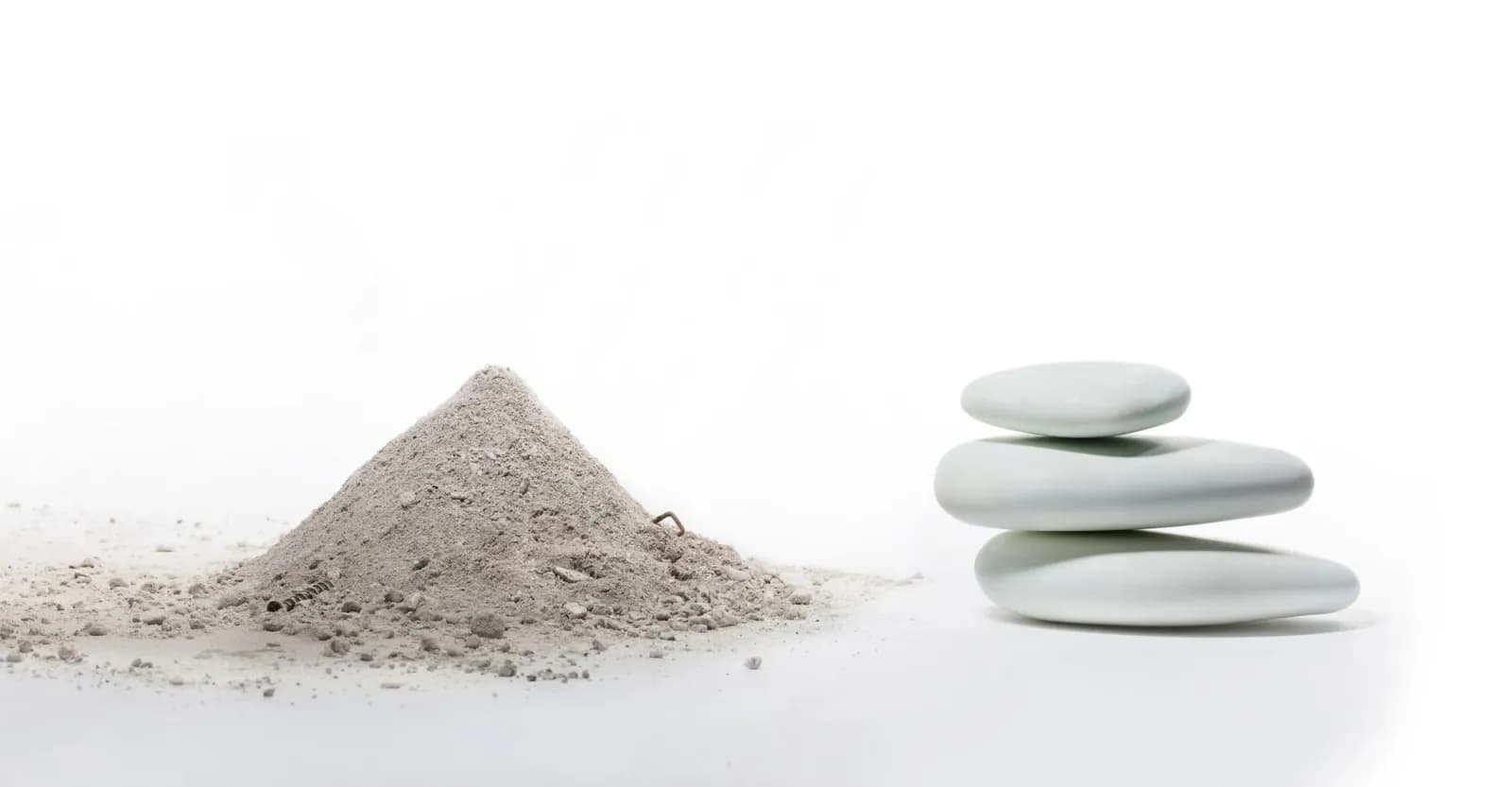
The short version, if you only read this: Turning pet ashes into stones is a process called solidification. It takes all of your pet's cremated ashes and forms them into a small handful of smooth, solid stones you can actually hold. It costs about $1,195 for a cat or dog, takes roughly three months, and works by mail: you send the ashes in, and the finished stones come back to you. The result is not an object that holds your pet's remains. It is your pet's remains, in a form you can keep in your hand.
The First Month
Practical help for the days after your pet dies.
Questions to ask a crematory. Words for telling children. Pages for decisions about ashes and belongings.
26 one-page cards, printable checklists, and fillable worksheets. Choose the situation you need help with and start there.
Inside the PDF. Tap a page to read it.
One payment. Instant PDF download. No subscription. Yours to print and keep.
You'll see Affluenss at checkout. FindPetCremations is operated by Affluenss LLC.
If it isn't what you needed, reply to your delivery email for a refund. No questions.
Card 1 of 26, free
The first night
The rule: nothing has to be decided tonight, except one thing.
Read tonight's cardClose the card
If they are still at home with you
The one thing to decide tonight is where they rest until morning. That is all.
- Lay them on a towel or a blanket in the coolest room you have: a laundry room, a garage, a tiled floor. Not the car.
- If you can, settle them on their side with the legs gently tucked, the way they slept. Do this soon rather than later. Within a few hours the body stiffens, and it becomes harder to move them with care.
- A little fluid can release. One towel underneath and one folded over is enough. This is normal, and it is not a sign that anything was done wrong.
- In a cool room they can stay overnight and through tomorrow. If it is warm where you are, wrap them in the blanket and then a large bag, and use the coolest space you have.
- Collar on or collar off. Either is fine. Many people take it off tonight and are glad later that they did.
If they died at the vet's
Then the where is already handled, and there is nothing you have to do tonight. The clinic will keep them safely until you have chosen what happens next. You can call in the morning. Card 4 covers what you can still ask the clinic for: time with them, a paw print, the collar back.
What you do not have to do tonight
- Choose a crematory. Tomorrow is fine. Almost every crematory collects within a day, and the person who answers the phone has heard every version of this call. Card 3 has the eight questions to ask.
- Decide private or communal. Card 2, when you are ready.
- Tell everyone. Tell the people in the house. Everyone else can wait until tomorrow, or next week.
- Move anything. The bowl, the bed, the leash by the door: leave them exactly where they are. Card 7 is for when you want it, and there is no deadline.
What to say in the house tonight
To a child: "[Name] died today. Her body stopped working and the vet could not fix it. It was not anyone's fault. We are going to be sad for a while, and that is okay." Then stop talking and let them ask. Card 6 has more, by age.
To each other: nothing clever. "I am so sad" is a complete sentence.
One small thing, if you want one
Sit with them for a few minutes. Tell them one thing you will miss. Turn off the light.
That is a goodbye, and it counts. A fuller one can come later, and card 16 will help. Tonight, this is enough.
If tonight feels like more than you can carry, card 25 has people who answer the phone at this hour.
A different way to hold on
An urn keeps your pet close, but at a distance. It sits on a shelf. You dust around it. You may go weeks without opening it, because opening it means loose ash, and loose ash feels like the last thing you want to disturb. The remains are near you, but they are not something you reach for.
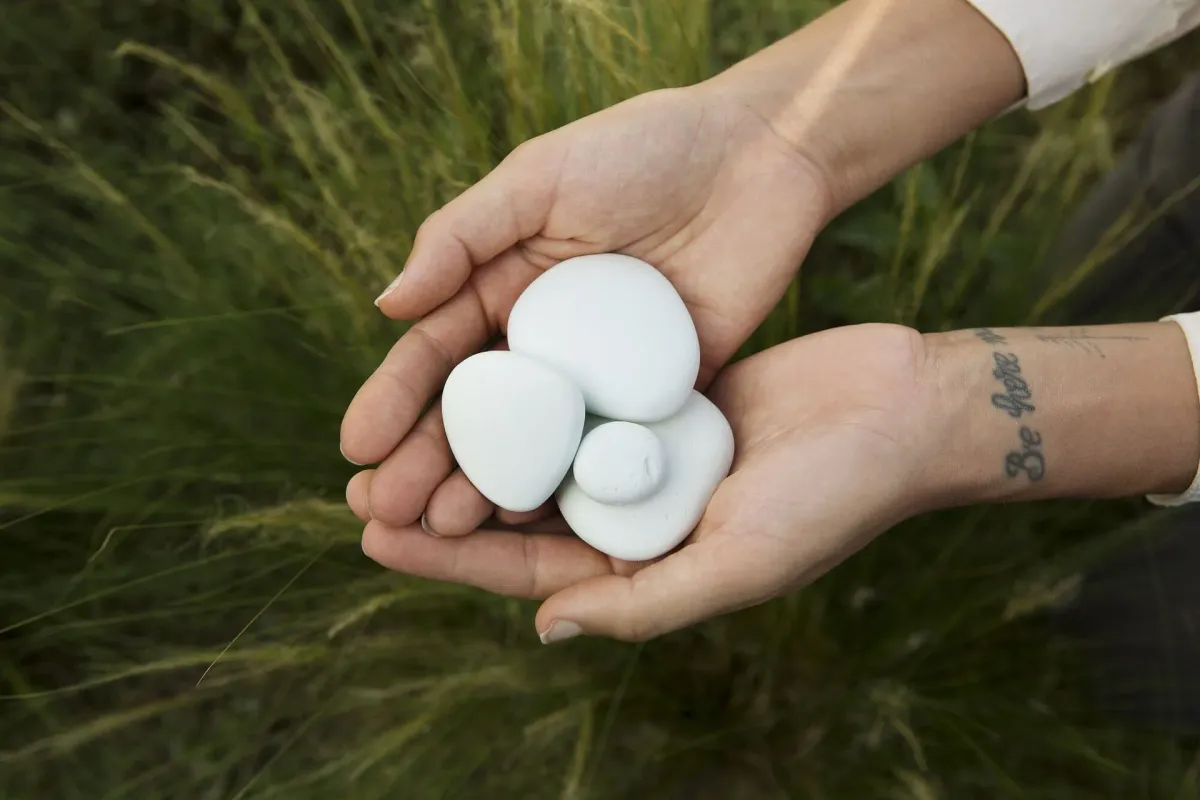
Solidification changes that. Instead of ash sealed inside a container, you get a small set of smooth stones you can pick up. You can hold one in your hand on a hard day. You can keep one in a pocket or a bag. You can set one in a child's palm and let them feel the weight of it. And because your pet comes back as many stones rather than one urn, you can give one to each person who loved them, so no single person has to be the keeper of all of it.
That is the real shift. It moves your pet's remains from something you keep to something you can touch again.
What solidification actually is
Solidification takes your pet's existing cremated ashes and turns them into solid stones, without adding filler and without discarding any of the remains. The finished stones are the ashes, reformed.
In short, the ashes are cleaned of small impurities, bound into a clay-like material, shaped, and then fired in a kiln until they set into smooth, stable stones. What you get back looks like a handful of polished river pebbles: solid, cool to the touch, and free of the dust and grit of loose ash. The colors are natural and vary from pet to pet, usually soft greys and whites, sometimes sage green, bronze, or blue-grey.

How it compares to other options
Every memorial choice trades off differently. This table lays the honest ones side by side, so you can see where solidification fits rather than take our word for it.
| Option | Can you hold or touch it? | Shareable across people? | Reversible? | Uses the ashes? | Permanence | Rough cost |
|---|---|---|---|---|---|---|
| Keep in an urn | The urn, not the ashes | One urn (or divide the ash) | Yes, ash stays ash | Holds them | Indefinite | $30 to $300 |
| Scatter | No, they are released | No, it is one moment | No, cannot regather | Releases them | Returned to a place | $0 to $500 |
| Bury | No | No, one site | Practically no | Buries them | Permanent in place | $0 to $200 |
| Ash jewelry | Yes, a small piece | Yes, one piece per person | Rest of the ash remains | A pinch each | Lasting | $50 to $500 |
| Memorial diamond | Yes, one stone | Usually just one | No, carbon is converted | A portion of carbon | Permanent | $2,000 to $20,000+ |
| Memorial tree | No, the tree, not the ash | No, one tree | No | Feeds the soil | Lives and grows | $30 to $200 |
| Solidify into stones | Yes, every stone | Yes, give one to each person | No (return-to-ash guarantee aside) | All of them | Permanent and stable | About $1,195 |
Where solidification stands out is the first two columns: it is the option you can hold in full, and the one you can genuinely divide among people without diminishing anyone's share. Where it asks the most of you is the "uses the ashes" column. It uses all of them, which is the honest cost of the form, and the reason for the two flags further down.
What it costs
As of July 2026, solidification costs about $1,195 for a cat or a dog. It is priced as a single flat service rather than by weight, so most household pets land at that same base price. Larger animals cost more because there is far more volume to process; a horse, for instance, runs about $9,995. The through-line is that price scales with the volume of remains, not with the kind of animal.
That puts it below a memorial diamond and above a simple urn, which is roughly where it sits in practice: more than keeping ashes as they are, less than converting them into a gemstone.
How long it takes
Plan on about three months, start to finish, as of July 2026. Processing usually begins around a week after you order, and the current estimate to finish an order placed today is roughly 84 days. That window moves with how many orders are in the queue, so it is worth confirming the current estimate when you order rather than treating three months as fixed.
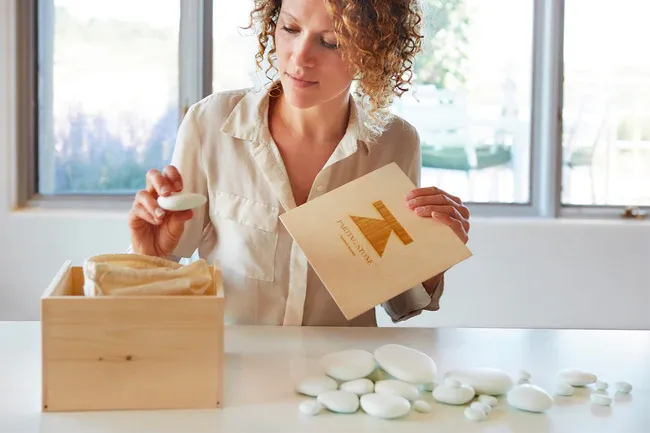
It is worth being plain about the shape of it: this is a mail-in service, not something done in an afternoon. You send your pet's cremated remains in using a collection kit, the stones are made and returned to you, and the whole thing arrives back as a small keepsake box of finished stones.
What people do with the stones
This is the part an urn cannot offer, and it is worth thinking about before they arrive, because how you plan to use the stones may shape how many people you want to include.
- Give one to each person who loved them. A parent, a partner, a child, a friend who helped at the end. Everyone gets a piece to keep, and no one has to be the sole keeper.
- Keep one where you already are. On a desk, a nightstand, a windowsill. Somewhere your hand can find it without ceremony.
- Carry one when you travel. A stone fits a pocket or a bag in a way an urn never will, so your pet can come along.
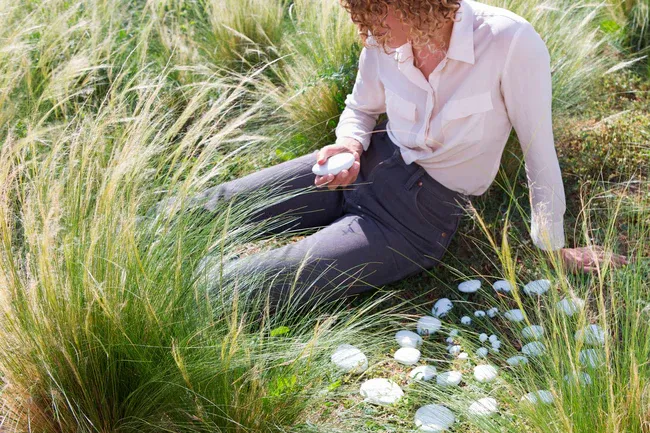
- Place one in the garden. Tuck a stone among the plants your pet used to lie near, or in a pot you tend, so part of them is outside in the green.
- Hold one on the hard days. The anniversary, the birthday, the quiet evening. Something to close your hand around.
- Let a child hold one. For a young family, a stone they can feel the weight of is often easier to understand than an urn they are told not to touch.
- Set them where they catch the light. On a sunny sill or shelf, the pale stones read as calm objects in the room rather than a memorial that asks for attention.
Two things to be honest with yourself about
Solidification is a good fit for a lot of families, but only if you go in clear on two points.
It uses everything, and it does not undo. Solidification uses the entire volume of your pet's remains and cannot be reversed. If you would also like to scatter some, bury some, keep some as ash, or divide ash among family, set that portion aside before you send the rest. Decide the split first, because after the stones are made, the choice is made too.
It is a mail-in service, not an afternoon. You send your pet's remains in and receive the finished stones back about three months later. If you need something immediate, this is not it, and that is worth knowing before you start rather than after.
Who makes solidified remains
Solidification is offered by Parting Stone, the company that pioneered the process. They send a collection kit, solidify the remains, and return the finished stones to you, along with a return-to-ash guarantee if the stones are not what you hoped for.
The bottom line
If what you want is your pet in a form you can hold, carry, and share, solidification does something no other option quite does. It is not for everyone: it uses all of the ashes, it cannot be undone, and it takes a few months by mail. But for families who find an urn too distant and scattering too final, turning ashes into stones offers a middle path, a way to keep a beloved companion close that you can actually put in your hand.
When you are ready, you can also make your pet a free, lasting place to be remembered online. Create a memorial, light a candle, and share their story with everyone who loved them.