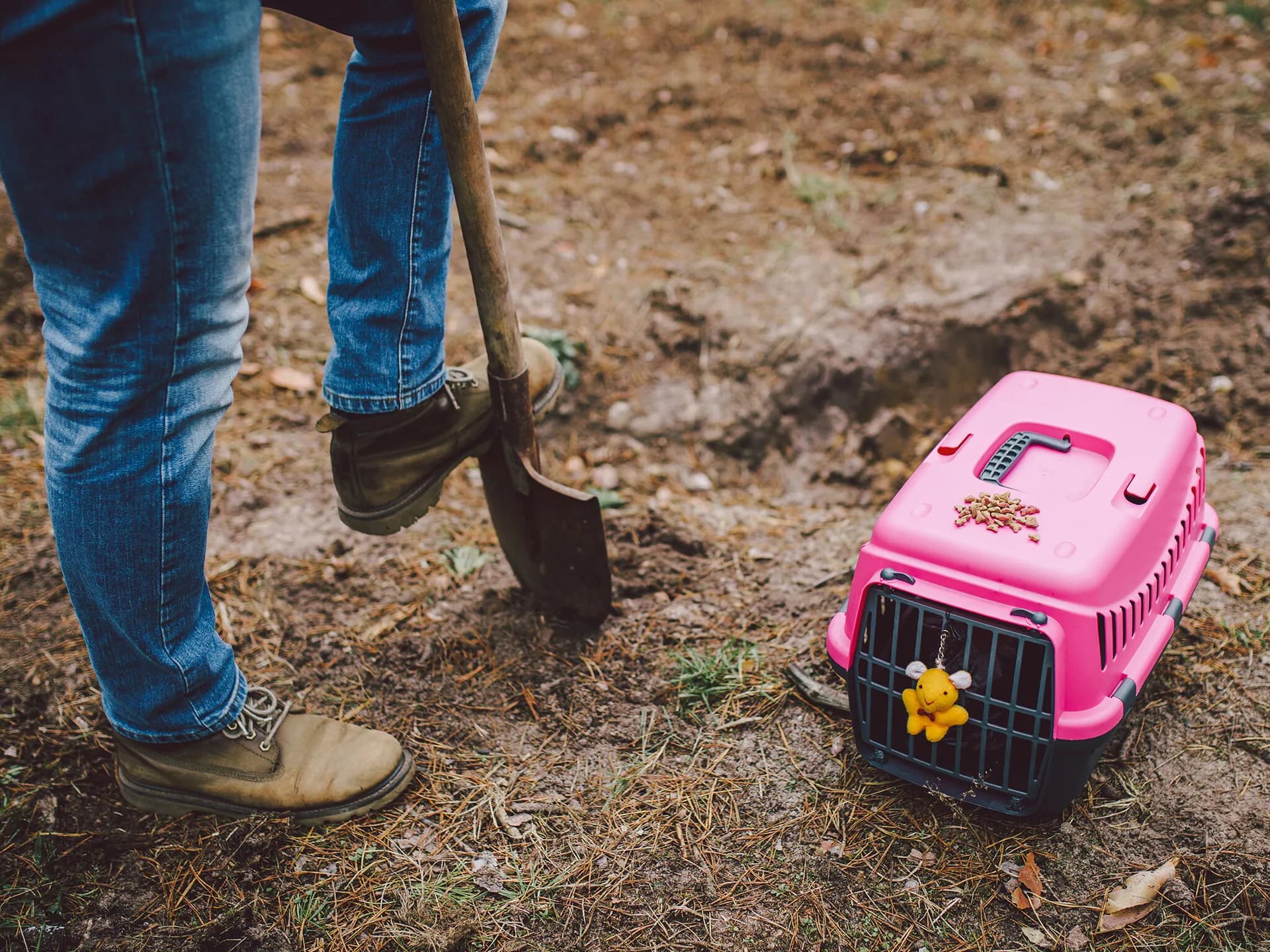
Losing a pet leaves you with tender, practical questions, and one of the most common is whether you can lay them to rest at home. This guide gives you a calm, straightforward answer, the general rules that apply across the country, and a simple walkthrough of how to do it safely and respectfully.
The short answer. In most of the United States, burying a pet in your own backyard is legal, as long as you follow a few common-sense rules about depth, location, and your local ordinances. A small number of cities prohibit it, and the exact requirements vary by state and county, so a quick check before you dig is worthwhile.
Can I bury my pet in my backyard?
Yes. In most parts of the United States you can bury a pet on property you own, and for many families it is a gentle, meaningful way to say goodbye close to home.
The main conditions are simple. You should own the land (or have the owner's permission), bury deep enough, keep the grave away from water sources, and follow any rules your city or county has. Most suburban and rural homeowners meet these conditions easily. The situations where backyard burial is not allowed tend to be dense cities, rental properties, and neighborhoods with homeowners' association or deed restrictions, which we cover below.
Is backyard pet burial legal?
Backyard pet burial is legal on private property in most states, but it sits beneath a small stack of rules rather than a single law.
At the broadest level, most states allow home burial of a companion animal and set a general floor for things like depth and distance from water. On top of that, your county or municipality may add its own ordinance, and some larger cities prohibit pet burial within city limits entirely. Finally, a homeowners' association or a deed restriction can limit burial even where the city allows it.
These rules exist for sensible, reassuring reasons rather than to make things difficult. Burying deep and away from water helps protect groundwater, keeps the grave from being disturbed by scavenging wildlife, and addresses ordinary public-health concerns. Once you understand the why, the how becomes easy.
Because the local layer matters most, the safest step is a quick check of your city or county rules before you dig. The exact statute or ordinance depends on where you live, so for the law in your specific state, see our pet cremation and burial regulations by state, which covers it in detail. This guide focuses on the general picture and the practical how-to.
How deep should you bury a pet?
As a general rule, bury a pet at least 3 feet deep, measured from the top of the body to the ground surface, and go deeper for larger animals.
A small cat or dog is usually fine at about 3 feet. For a medium or large dog, aim for 4 to 5 feet where the soil allows. Depth is the single most important detail, because it is what keeps the grave undisturbed. Enough soil on top discourages scavenging animals, contains odor, and lets nature do its work quietly. If you hit rock or a high water table and cannot reach a safe depth, that is a sign this spot (or backyard burial in general) may not be the right choice, and the alternatives later in this guide are worth considering.
How do you bury a pet safely?
To bury a pet safely, choose a spot well away from water lines and vegetable gardens, dig down at least 3 feet, wrap your pet in something biodegradable, and mark the place so it stays protected. The same steps work whether you are burying a dog, a cat, or a smaller pet.
Here is a simple, gentle walkthrough:
- Choose the location. Pick a quiet spot on your own property, at least 100 to 150 feet from any well, stream, or water line, and away from utility lines and vegetable gardens. Avoid low areas that flood.
- Dig to a safe depth. Aim for at least 3 feet of soil above your pet, deeper for a large dog. The hole will need to be a little larger than your pet and any wrapping.
- Use biodegradable materials. Wrap your pet in a natural-fiber blanket, towel, or shroud, or use a wooden or sturdy cardboard box or a biodegradable pet casket. It is best to avoid plastic bags or sealed plastic containers, which do not break down.
- Fill and mound the soil. Replace the soil and mound it slightly, since the ground will settle over time.
- Mark the grave. A stone, a plant, a small tree, or a simple marker helps you find the spot and keeps it from being disturbed.
One gentle but important note. If your pet was put to sleep by injection, the medication (pentobarbital) can linger in the body and harm wildlife that digs at a shallow grave, a risk the U.S. Fish and Wildlife Service and the AVMA Guidelines for the Euthanasia of Animals (2020) document in scavengers such as eagles and dogs. This is easy to manage. Bury a little deeper, choose a well-sealed biodegradable casket, or consider cremation instead. Your veterinarian can tell you what was used and what they recommend.
Does it depend on which state I live in?
Yes. The general 3-foot, away-from-water guidance holds almost everywhere, but the exact numbers and permissions depend on your state, and often on your county or town.
Some states set a specific minimum depth or a required setback from water. Some ask that burial happen within a day or two of death unless the body is kept cool. Cities frequently have their own ordinances. Because of this local variation, the most reliable answer is always your own city or county. For the specific law where you live, our pet cremation and burial regulations by state guide breaks it down state by state, including the genuine surprises (for example, both New York City and Chicago permit burying a pet on your own property, and Florida's rules name dogs and cats directly). Use the state finder just below to jump to yours.
What are my options if backyard burial isn't allowed?
If backyard burial is not allowed where you live, or simply is not the right fit for your family, you have several loving alternatives, and none is more correct than another.
- Cremation. The most common choice. You can keep your pet's ashes, scatter them somewhere meaningful, or place them in an urn or keepsake. Our directory of pet cremation providers helps you find a trusted, local option, and our cremation cost guide explains typical pricing. If you are weighing the two paths, our pet burial vs. cremation comparison lays them side by side.
- A pet cemetery. Dedicated pet cemeteries offer a permanent, cared-for resting place and a spot you can visit, which is a comfort to many families.
- Scattering or a memorial. Some families choose to scatter ashes in a favorite place or create a lasting memorial at home. Our pet memorial ideas and guide to ash scattering walk through gentle, meaningful options.
Whatever you choose, there is no wrong way to honor a pet you loved. Take the path that feels right for you.